


Kagi News
4.236.00 Reviews
App Specs
- Version
- 1.4.0
- Updated On
- License
- Free
- Downloads
- 10,000+
- Developer
- Kagi Inc.
- Categories
- News & Magazines
- Platform
- Android
Screenshots
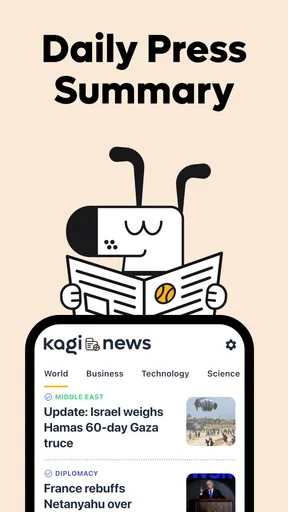
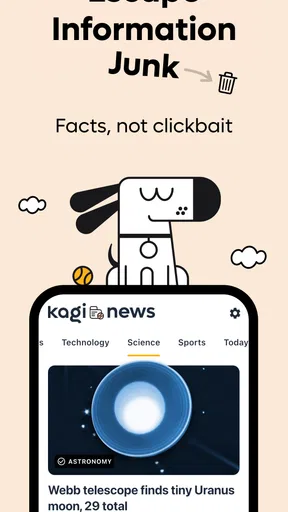
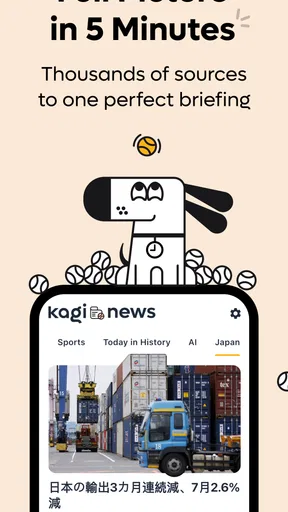
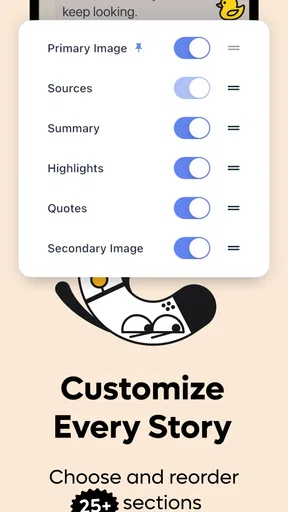
 Analysis by AppCompare
I judge a news app less by how many headlines it can show me than by whether it helps me get oriented without turning a quick check into a long scroll. Kagi News is aimed at that calmer, more deliberate kind of reading. It is a free news and magazines app from Kagi Inc., and its brief is easy to understand: make it easier to keep up while spending less time sorting through news.
Where it fits into an ordinary day
I find the clearest way to decide whether a news reader suits me is to connect it to a real routine, rather than judge it by a quick browse on installation day. Imagine checking headlines while waiting for a meeting to start, then returning to the same app over lunch for a little more context. Kagi News is most appealing if those small windows are enough for you to get oriented and choose what deserves your attention.
That routine also gives you a practical test: after a few days, can you name the stories you meant to follow without feeling that you spent the morning chasing headlines? If yes, the app may be helping you read with more intention. If you leave each visit wanting a completely different mix of local alerts, specialist analysis, and live updates, it may be better as one reading option among several.
A quicker route from opening the app to understanding the day
That promise sets a useful expectation, but it is not a guarantee that every visit will feel instant or that every headline will suit your interests. The value of a news reader depends on what it puts in front of you, how clearly it presents the material, and whether you can leave with a sensible picture of events. I would approach Kagi News as a focused reading option rather than a replacement for every source I follow.
In everyday use, a good workflow is to open it during a natural pause, scan for stories that matter, and choose only a few to read closely. That keeps the app from becoming another endless feed competing for attention. If you are checking news between tasks, the key question is not whether the app can show a large volume of content, but whether its presentation helps you decide what deserves a longer look.
Speed is about fewer detours, not just loading
I would separate perceived speed into two parts: how quickly the app responds and how quickly I can make sense of what I am seeing. The first can vary with a device and connection, so I would not promise a particular loading time. The second is where a purpose-built news reader can be useful: a clear reading path can reduce the time spent jumping between apps, search results, and social posts just to understand why a story matters.
A practical tip is to give each visit a purpose. For example, decide that you are checking the main developments before work, not trying to read every available article. That makes it easier to notice whether the app is genuinely saving time for you. If you still find yourself opening several other feeds to fill gaps, it may work better as one part of your news routine than as your only source.
Worth Reading Before You Choose

Flipboard Shows What News Apps Must Do Beyond the Feed

Switching to Android Auto Means Rethinking Your Driving Routine

Google Calendar Makes a Crowded Week Easier to Manage

Ludo King Makes the Most of the Minutes Between Plans

Baby Panda World Brings Quick Play to Modern Phones, but Its Game Library Feels Busy

ESPN’s Live Game View Makes Following Close Games Easier
There is a trade-off in a streamlined experience. A more curated or focused way of reading can feel less noisy, but it may not satisfy someone who wants to browse every niche topic or follow a breaking story minute by minute. When a developing event needs immediate updates, I would still consult a source that specializes in live coverage. Kagi News makes more sense for orientation and considered reading than as an emergency alert system.
Busy reading sessions reveal the real trade-offs
The app is easiest to assess during a heavier news day: several topics compete for attention, you have limited time, and you need to decide what to open now and what can wait. I would use it to make an initial pass, select a small number of stories, then pause rather than continually refreshing. That habit is useful with any news app, but especially with one whose appeal is helping readers spend less time on the routine task of keeping up.
One non-obvious benefit of this approach is that it can make your reading more intentional. Instead of treating every headline as a prompt to investigate immediately, you can separate “I should know this happened” from “I want to understand this in depth.” The distinction reduces unnecessary context switching. It also exposes a limitation: if you enjoy wandering from one subject to another, a focused reader may feel too restrained unless you deliberately make room for that exploration.
For a realistic morning routine, I would check the app while having breakfast, note the few stories likely to affect the day, and save deeper reading for a quieter moment if the available options support that workflow. I would not assume a particular save or offline feature without checking the current interface. The broader point is to avoid treating a quick news check as a commitment to finish every article at once.
During a long session, perceived performance is not only about responsiveness. Reading comfort, article length, and the effort of moving between subjects matter just as much. If the app feels easy at first but makes it hard to return to a story later, that could weaken its usefulness for people who read in short bursts. I recommend trying it in the way you actually consume news—one brief check, then a return later—rather than judging it in a single uninterrupted session.
Reliability means knowing when to use another source
I would not confuse a reliable reading experience with a guarantee that every story will be available or that the app will cover every event. News coverage changes, and a reader’s usefulness depends on the subjects and sources relevant to the person using it. For important or fast-moving developments, I would verify details with a primary source or a publication that is reporting live. That is sensible practice, not a special defect of this app.
For routine reading, the more useful test is whether Kagi News gives you a dependable place to begin. Try opening it at the same time of day for several days and notice whether it consistently helps you identify what to read next. If the selection repeatedly misses your local concerns, work, or interests, that is a meaningful mismatch even if the app itself runs smoothly. A news app should fit your information needs, not merely look tidy.
Another useful habit is to keep a separate route to sources you trust for specialized subjects. A general news reader can help with a broad overview, while a specialist publication may offer the depth, terminology, or local context that a general roundup cannot. This division of labor helps prevent the common mistake of expecting one app to be equally strong at quick summaries, investigative reading, neighborhood updates, and live coverage.
Kagi News has an average rating of 4.2 from around 300 ratings, with a few dozen written reviews. That is a reasonable sign that other readers have found value in it, but ratings cannot tell me whether its coverage matches your habits or whether you will prefer its reading style. I would treat the score as background, then make the decision based on a short personal trial and the kinds of stories you want to see.
Device fit and practical expectations
The current version is 1.4.0, and the app requires Android 7.0 or later. It is rated for Everyone, so its stated age suitability is broad. Those details make it straightforward to check basic compatibility before installing, especially if you are using an older Android device. The app has passed 10,000 installs, which suggests it has found a real audience, though that alone does not predict how well it will perform on a particular phone.
I would not infer battery use, storage demands, or background activity from the app’s category or its stated minimum operating system. If you are cautious about resources, pay attention during normal use: notice whether the device becomes warm during a longer reading session, whether the app remains comfortable to return to, and whether your usual battery pattern changes. Those checks are more useful than assuming a news app is automatically lightweight because it is not a game.
On an older phone, the practical experience can depend on more than operating-system compatibility. A weak connection, limited available memory, or a crowded device can affect how any reading app feels. If a page seems slow, I would first compare it with other apps on the same connection before deciding the reader itself is the cause. This is especially useful when reading away from home, where a brief network slowdown can be mistaken for an app stability problem.
For readers who rely on a particular accessibility setup or have specific display preferences, I would check the actual reading interface before making it the main news source. The most important thing is whether text remains comfortable over more than a quick glance and whether you can move through the material without strain. News reading often happens in small intervals, but those intervals add up, so comfort can matter more than a flashy first impression.
Who will get the most from it—and who may not
I can see Kagi News suiting someone who wants a cleaner starting point for daily reading and would rather spend time understanding selected stories than scanning a sprawling social feed. It is also a sensible candidate for readers trying to build a modest news habit: check in, choose what matters, and get back to the rest of the day. Since it is free, trying that routine does not require an upfront purchase.
It may be a poor fit if your main need is constant live updates, a highly specialized subject feed, or the broadest possible stream of headlines. In those cases, a dedicated broadcaster, local outlet, specialist publication, or the news sources you already trust may be better. Likewise, if you enjoy the unpredictability of a social timeline and discovering stories through conversation, a more orderly news reader could feel limiting rather than calming.
Compared with the usual alternatives, the distinction is about how you want to encounter news. Social platforms are good at surfacing discussion and unexpected links, but can make it difficult to separate a useful overview from a noisy stream. Individual publisher apps offer direct access to their own reporting, yet require more switching if you follow several outlets. Kagi News is worth considering as a middle ground for checking the broader picture, while keeping specialist sources close for depth and verification.
My performance verdict
My overall view is that Kagi News is most promising when treated as a deliberate entry point, not as a promise of instant answers or complete coverage. Its strength is the idea of making routine news reading less sprawling. Its main limitation is the same one faced by any reader that prioritizes focus: a neat starting point cannot replace the variety, urgency, or subject-specific depth available elsewhere.
For a fair test, install it on a compatible device, use it at your normal news-checking times, and judge whether it helps you finish with a clearer sense of the day. Pay attention to the time you spend switching to other sources, how well the selection fits your interests, and whether the reading experience stays comfortable in short sessions. If those habits improve, it has earned a place in your routine; if you still need several alternatives for the stories you care about, keep it as a companion rather than making it your sole source.
My recommendation is to try it if you want a more purposeful daily news check, while keeping another source for live developments and specialist coverage. That is the most realistic way to benefit from what Kagi News sets out to do without expecting one app to meet every information need.
Pros
- Clean
- reader-friendly interface makes articles easy to scan.
- Summaries help you understand key points quickly.
- Stories are grouped by topic for easier browsing.
- Coverage draws on multiple publications and perspectives.
- Personalization helps tailor the news feed to your interests.
Cons
- A paid subscription is required for full access.
- The available publications may not suit every reader.
- Summaries can leave out nuance from the original articles.
- News selection may feel limited for niche interests.
- Some linked articles require separate publisher subscriptions.
FAQs for Kagi News
What is Kagi News?
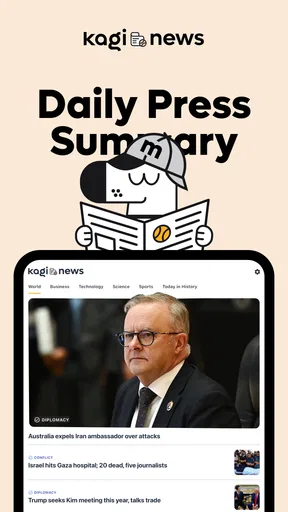
Kagi News is a news-reading app designed to help you follow current events from a range of publishers in one place. It uses Kagi’s news-curation approach to organize stories and make it easier to see how different outlets are covering the same topic. The app is intended for readers who want a more focused way to keep up with the news, rather than switching between many separate publisher apps or websites.
Is Kagi News free to use?
Kagi News may be available to try without a paid Kagi plan, but access to features and any usage limits can change over time. Kagi’s broader services include paid subscriptions, so check the app’s current store listing and in-app information before downloading if cost is important to you. Also review any subscription terms carefully, including the price, renewal schedule, and cancellation instructions shown for your region.
How does Kagi News select and organize stories?
Kagi News brings together reporting from multiple sources and groups related coverage so readers can explore a story beyond a single headline or publisher. Its curation is meant to make news discovery more convenient, but no aggregation system can include every outlet or represent every perspective equally. If a topic matters to you, open the linked reporting, compare sources, and consider checking primary documents or direct statements where available.
Can I choose which news sources or topics appear in Kagi News?
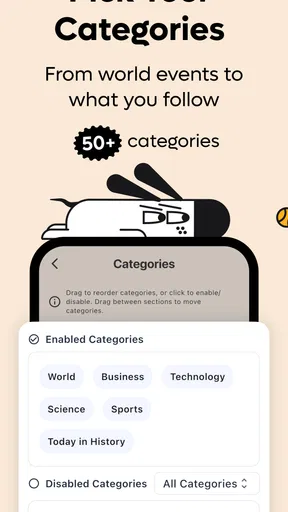
The options for tailoring your feed may depend on the app’s current version and the features available in your region. Before relying on it for a particular beat, explore its settings and topic controls to see whether you can follow subjects, adjust preferences, or hide coverage you do not want. Personalization can make browsing more relevant, but it is still useful to check a range of sources rather than relying on one feed.
Does Kagi News provide full articles, and what should I know about links and privacy?
Kagi News may display story summaries or previews and link out to the publisher for the complete article; access to that article can depend on the publisher’s paywall or subscription requirements. Check the app’s current description for details about reading and sharing features. As with any news app, review its privacy policy and permission requests, and remember that opening external links may involve the publisher’s own tracking and privacy practices.


